
Anton Bruckner’s Mass in F minor
A Monument of Sacred Music
Anton Bruckner completed his Mass in F Minor on September 9, 1868. The work is considered one of the most important settings of the mass in the 19th century. It poses some challenges to the performers while at the same time testifying to Bruckner’s visionary thinking. The history of the origins of the Mass is characterized by many obstacles: controversy, delays and constant revisions mark the path to its completion. In particular, the difficulties during the rehearsal phase highlighted the discrepancy between Bruckner’s vision and the practical challenges of the music.
The creation of the Mass in F minor
Johannes Herbeck, Director of Music of the Vienna Court, was enthusiastic about Bruckner’s 1864 Mass in D minor. He commissioned a new mass from the Upper Austrian composer, who duly began work on his Mass in F minor in 1867. This is Bruckner’s third great mass composition and reflects his characteristic compositional features: a deep sense of tone color, complex harmonies and symphonic structure.
The work is dedicated to Anton Ritter Imhof von Geißlinghof, an important supporter of Bruckner’s in the Office of the Court Chamberlain. In a letter to the dedicatee, Bruckner emphasized that he had taken “the greatest effort” in composing the mass. In the early biographies of Bruckner, reference is made to his spiritual inspirations in an anecdotal way – for example, the idea for the Benedictus is said to have come to him during Christmas night.
Yet in the context of Bruckner’s life at the time, the completion of the F minor Mass in September 1868 was an important personal milestone. He had suffered a nervous breakdown followed by a period of recuperation at the sanatorium in Bad Kreuzen, but in 1868 he was finally offered a post at the conservatorium as successor to his teacher Simon Sechter (he received the contract on July 6), and he was also appointed court organist.
The early performances in Vienna: challenges and triumph
The actual premiere of the Mass however was significantly delayed, due to artistic misunderstandings and considerable problems in the first phase of rehearsals at the end of 1868 and the beginning of 1869. The participants may well have been overwhelmed by the complex harmonies, the long choral fugues and the size of the forces required.
The exact circumstances and reasons are known only from anecdotes reported the early biography by August Göllerich (Vol. IV/1, pp. 78 and 200), according to whom the court Director of Music Herbeck apparently would not perform the work because it was “too long and unsingable”. Herbeck also confronted Bruckner with the remark, “Bruckner, you know that Wagner was wrong with his Tristan and that I was wrong with my Symphony in B-flat major: can’t you admit that you’ve miscalculated with this Mass, that you’re wrong too?” (Göllerich, Vol. IV/1, p. 79).
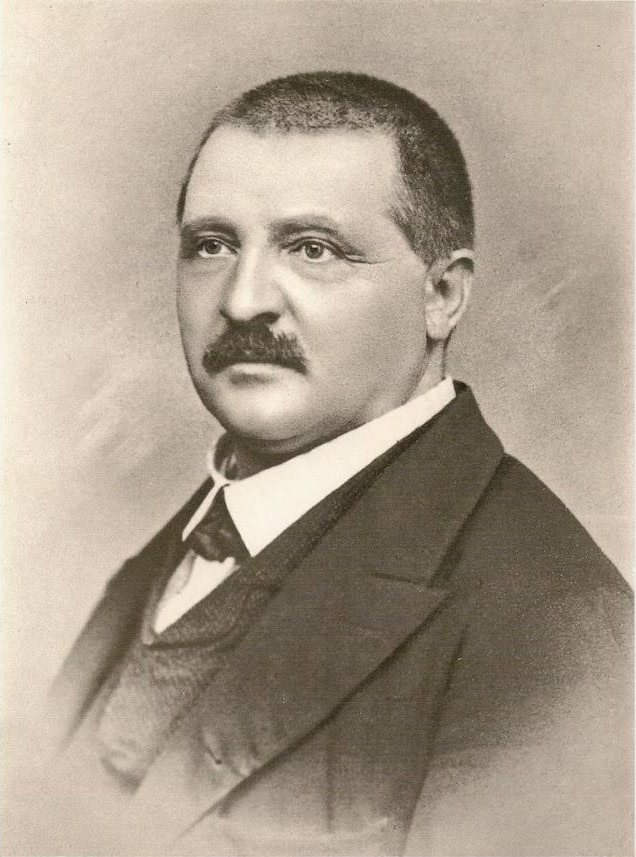
Anton Bruckner, 1868
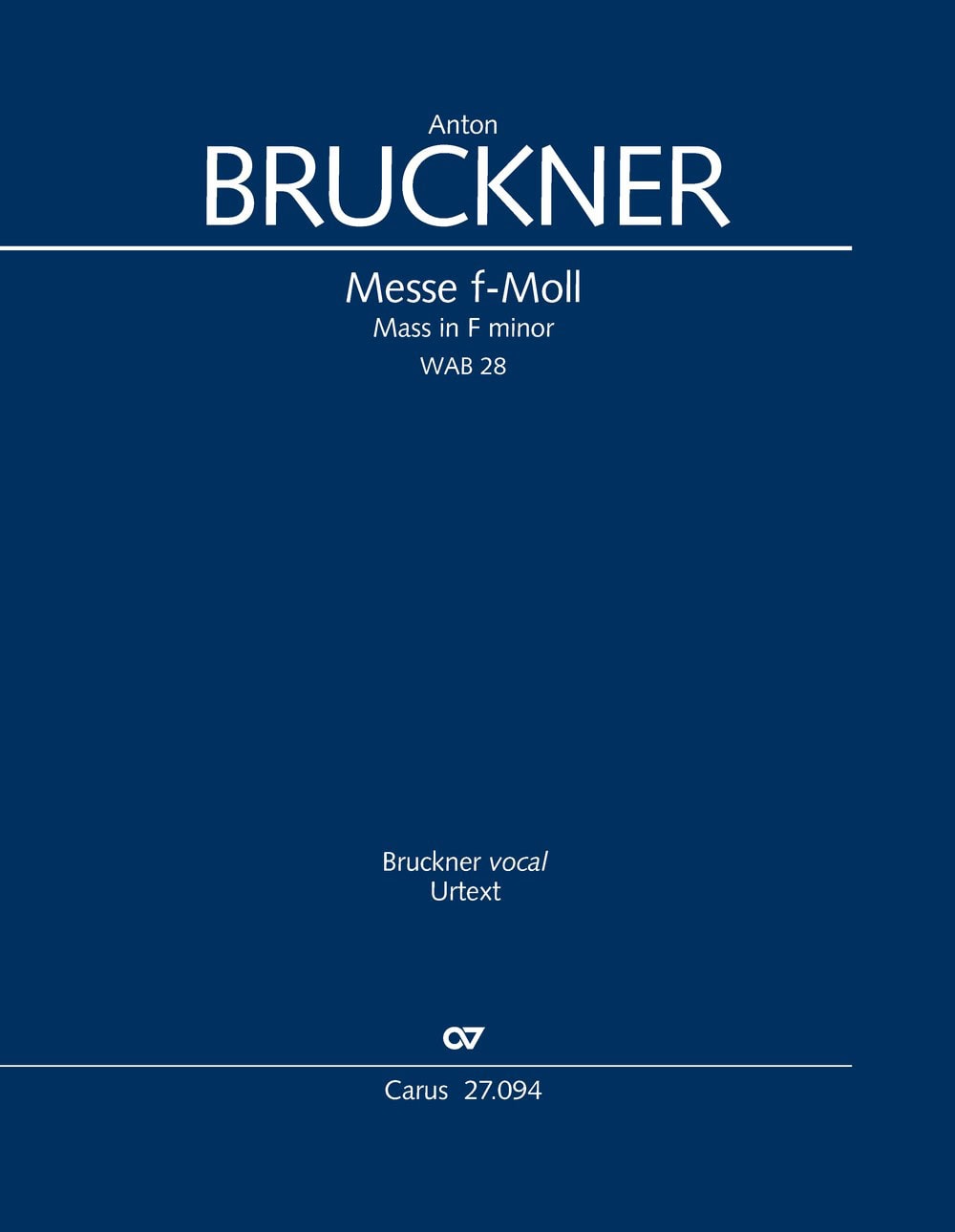
Anton Bruckner
Mass in F minor
WAB 28
Carus 27.094/00
Presumably Bruckner was disappointed and felt misunderstood when the first performance of his Mass was repeatedly delayed. But despite these setbacks, his persistence in continuing to revise the work and his artistic determination ultimately led to success. Almost four years after those first unsuccessful rehearsals, the premiere of the Mass took place on June 16, 1872, in the Church of St Augustine in Vienna, conducted by Bruckner himself. He organized everything: he engaged the renowned choir and orchestra of the Vienna Court Opera and covered the financial costs of the performance. According to a letter dated June 23, 1872, Bruckner paid the considerable sum of 300 guilders, the equivalent of two and a half months’ salary!
The Mass was also performed at the Vienna Court Chapel. On June 19, 1872, the daily Morgenpost wrote that the Mass was reminiscent of Beethoven’s Missa solemnis, but also “did not disavow the rich foundations of Bach’s formal structures” and at the same time was “not free of the prevailing Wagnerian influences”. The next edition of the newspaper Das Vaterland even emphasized that “every sensitive soul will be moved by the work” and that from the opening sounds of the Kyrie one is confronted “with an idiosyncratic spirit”.
As mentioned above, Bruckner began to make changes to his work right at the beginning of the first rehearsals in 1868 in his attempts to optimize the structure and sound. This revision process would then drag on for more than twenty years until the final version of 1893, on which the Carus edition of the original work is based (edited by Felix Loy, Carus 27.094). It was not until 1894 that the Mass was finally published by Doblinger: however, this first edition contains many changes, including some concerning the instrumentation, made by Bruckner’s student Josef Schalk, which cannot be regarded as authorized by the composer.
Performance practice today: challenges and opportunities
Today, the F Minor Mass is appreciated and performed by choirs throughout the world. Nevertheless, each performance is a challenge, because the work requires performers to understand and express the delicate balance of sound which reflects the internal sense of the sacred on the one hand and the work’s symphonic monumentality on the other.
Due to the large forces required, smaller choirs can quickly reach their limits. So instead of the original version (edited by Felix Loy, Carus 27.094), a useful alternative for smaller choirs is the arrangement of the work in the series “Great Choral Works in Small Scorings” (Carus 27.094/50). The arranger Joachim Linckelmann has reduced the wind parts from fifteen to just seven. The string parts remain identical to the original, but they can now be reduced in number. The vocal parts (solos and chorus) are completely unaffected by the revised instrumental arrangement, so that the vocal and choral scores of the Carus Urtext edition can still be used. In this way, both the sacral character and the complex structure of the mass are preserved. A practice aid for choir singers is also available from Carus.
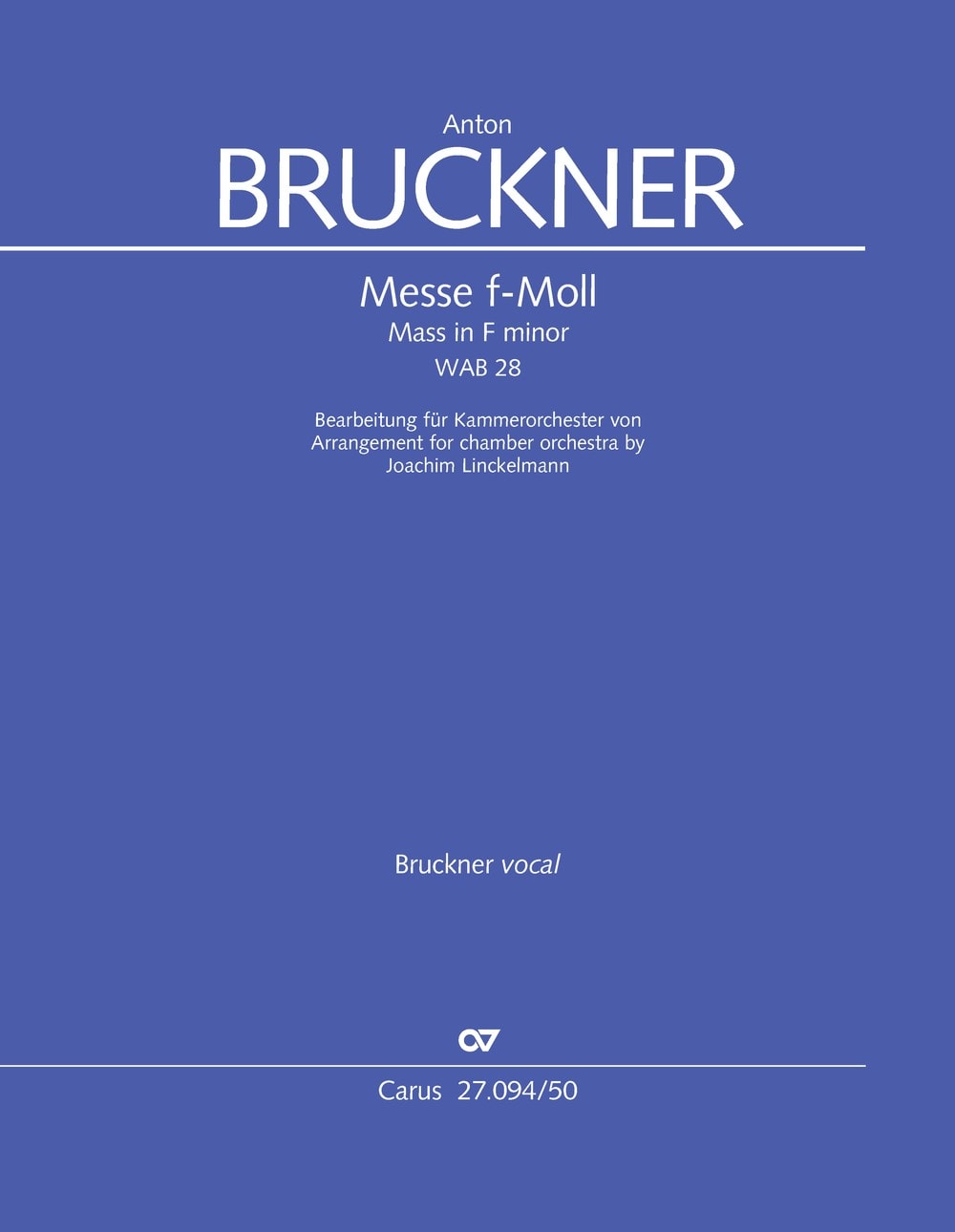
Anton Bruckner
Mass in F minor
arranged for chamber orchestra
by Joachim Linckelmann
Carus 27.094/50
Despite all the challenges that the performance of the F Minor Mass presents for performers and audiences alike, this masterpiece has earned its place in music history and will continue to inspire future generations.

Lorenz Adamer studied musicology and philosophy at the universities of Vienna (Austria), Cremona/Pavia (Italy) and Tübingen. He has been working at Carus-Verlag since summer 2017, initially as a sales assistant and now in the editorial department. In his spare time he is a keen clarinettist, and sings in a choir.
Choral Collection Bruckner. Sacred choral music
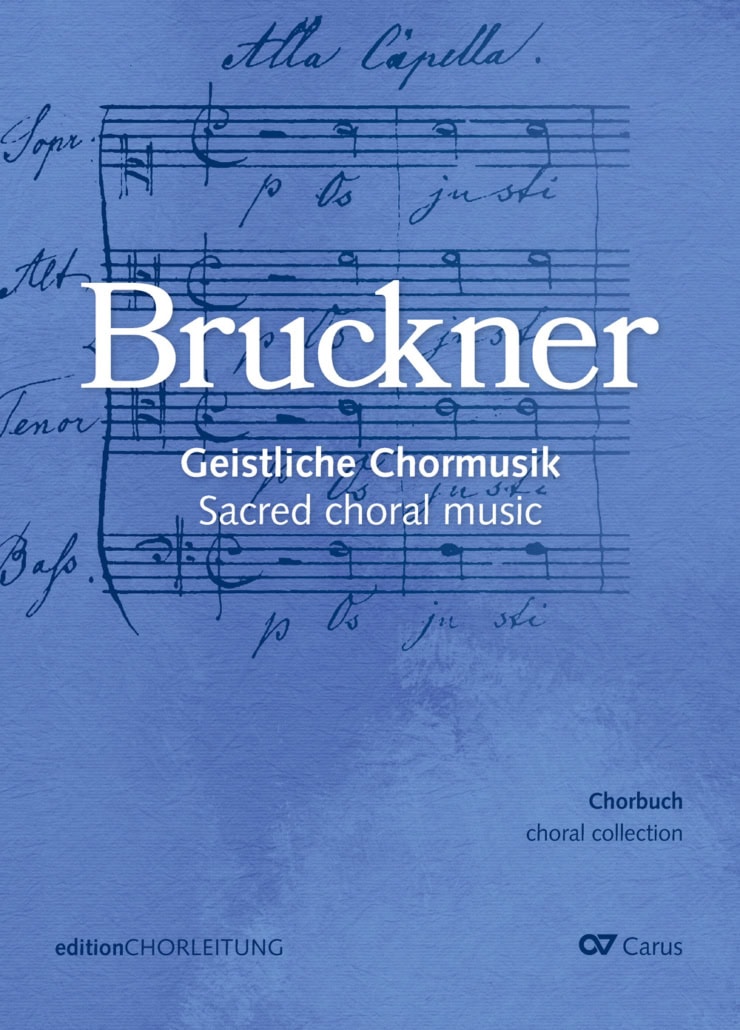 Great art in small forms – Bruckner’s smaller sacred works reveal a more personal side to the master symphonist and creator of large-scale orchestral masses. In addition to the well-known motets, the choral collection includes smaller sacred works such as short mass settings (a cappella or with organ) and simple liturgical songs and hymns, some with organ or occasionally with trombones.
Mass in E minor
In 1866 Anton Bruckner composed his solemn Mass in E minor, which he revised extensively in 1876–1882. Composed for a performance in the open air, the work stands out among Bruckner’s masses and those of his contemporaries because of its scoring, omitting strings and organ in favor of an accompaniment for wind and brass instruments alone (“Harmoniemusik”).
Missa solemnis


Leave a Reply
Want to join the discussion?Feel free to contribute!