
“intimate but equally dramatic, it is dense but at the same time accessible”
María Guinand on Bruckner’s Mass in E minor
50 years of Carus – 50 years of passion for choral music, which we share with you. In the Carus anniversary year, each month in the CARUS blog prominent choral directors present their personal highlight from five centuries of choral music for you.
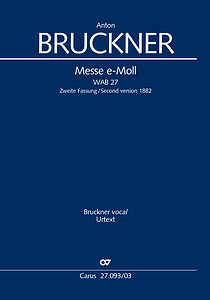
The Mass in E minor (WAB 27) by Anton Bruckner captivated my soul and intrigued my mind from the very first performance I heard many years ago, because it is intimate but equally dramatic, it is dense but at the same time accessible, it is imposing but also humble. I agree with Jean Gallois’ affirmation that this is a “remarkable monument that announces news trends towards a different music aesthetic” (Jean Gallois: Bruckner. Ed. Seuil. Solfèges, Paris 1971).
The Mass composed in 1866 was commissioned by the Bishop of Linz, Franz-Josef Rudigier, to dedicate the Votive Chapel of the new Cathedral. The Mass was then premiered in its first version conducted by the composer and with the participation of the choirs Liedertafel Frohsinn, the Sängerbund and Musikverein of Linz. Bruckner revised this Mass on several occasions (as he did with most of his works) and it was only in 1885 that the Mass was performed in its final version for the celebration of the centenary of the Diocese of Linz.
The Mass in E minor uses an 8-part choir and an instrumental ensemble of woodwinds and brass (2 oboes, 2 clarinets, 2 bassoons, 4 horns, 2 trumpets and 3 trombones), instrumentation especially chosen because the Mass had to be performed outdoors. The absence of the organ as well as of soloists is particularly singular. There is an excellent chamber version for choir and organ transcribed by Klaus Rothaupt in the Carus-Verlag catalogue
I think that the sound of Bruckner’s sacred music is unique, particularly in this monumental Mass, because of his individual and dramatical way of interpreting the liturgical texts thus creating many different atmospheres through contrasting dynamics and articulations. Stylistically, Bruckner immerses himself in the polyphonic and contrapuntal language of the Renaissance and in the austerity of Gregorian chant, all combined in a natural and unique use of harmony that evokes Schubert’s enharmonic modulations and Wagner’s chromatic progressions continually moving the tonal center. The composer displays various compositional styles and shows his deep knowledge of the choral instrument as well as the orchestral palette. The choir is the main protagonist and the instrumental ensemble adds color to the harmonies or appears to “punctuate” either a new entry, a new articulation or to highlight a word. The extensive vocal range, the chromatic language and the complex polyphony need an experienced choir and a sensitive conductor able to combine successfully all these elements and produce a balanced and emotional interpretation.
Bruckner’s Mass in E minor is a masterpiece of sacred music of all times where he expressed the liturgical drama of the Mass in a very personal way and created a radiant and transcendent musical experience. Undoubtedly this work must be part of every choral conductor’s repertoire.
María Guinand, choral and orchestral conductor, university professor, pedagogue and leader of choral projects, is currently Artistic Director of the Schola Cantorum Foundation of Venezuela and the Choir of the Polar Foundation. In her long career, she has been the Associate Professor of the Simón Bolívar University (1976–2018) (Venezuela); Coordinator of Choral Symphonic projects of El Sistema (1980–2012); Artistic Director (2003–2017) of the “Música para Crecer”.
Magnificat
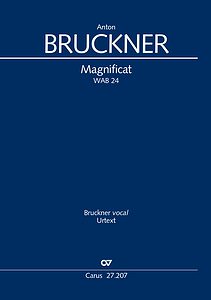 What does early Bruckner sound like? The Magnificat in B flat major casts a completely unexpected light on the young composer, on the threshold of composing his great church works.
Te Deum
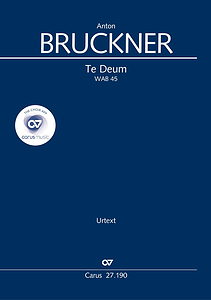 Anton Bruckner’s Te Deum – a high point in the composer’s output and one of the most important works of the sacred choral repertoire in the 19th century – is now available in a modern, scholarly edition.
Locus iste
 The famous Gradual for the church consecration, written in 1869 for the consecration of the Votive Chapel of Linz Cathedral. A great piece to immerse yourself in a common choral sound – if everyone has practised their notes beforehand.
Bruckner für Gottesdienst und Konzert
 34 shorter sacred works (Latin or German), mainly for SATB choir.


Leave a Reply
Want to join the discussion?Feel free to contribute!