
A Mysterious Fairy Tale, a Modern Opera, a Fragment: Giacomo Puccini’s Turandot
A Fragment Without a Finale – The Great Mystery of Turandot
Giacomo Puccini died while working on his final opera, Turandot, leaving it unfinished. It was the first time he had chosen to set a fairy tale to music, and at the same time, it is his most modern opera. The practical edition from Carus offers a choice of two different endings: the second version of the finale by Franco Alfano (referred to as Alfano 2), which has been the standard since the premiere, and an ending reconstructed in 2022 by Puccini scholar Deborah Burton, based on intensive source and textual research. Henning Bey, Promotion Manager for Stage and Orchestra at Carus, explores Puccini’s unfinished opus summum and this new Carus edition with two alternative endings.
A Fragment Without a Finale: Reception and Evaluation
On April 25, 1926, Arturo Toscanini conducted the world premiere of Puccini’s unfinished Turandot at La Scala in Milan. As the final notes written by the composer faded after the funeral procession following Liù’s death, Toscanini laid down his baton, turned to the audience, and announced that Puccini’s opera fragment ended there, because the maestro had died before completing the work.
This premiere was explicitly conceived as a memorial for the deceased, hence the performance of the incomplete fragment without further addition. In the year and a half following his death, Puccini’s once-close circle – including Toscanini, the publisher Tito Ricordi, and his colleague Guido Zuccoli, who was responsible for the piano score – searched diligently for the right composer who could complete the fragment. They finally settled on Franco Alfano (1875-1954), himself a successful opera composer and, moreover, a friend of Puccini’s.
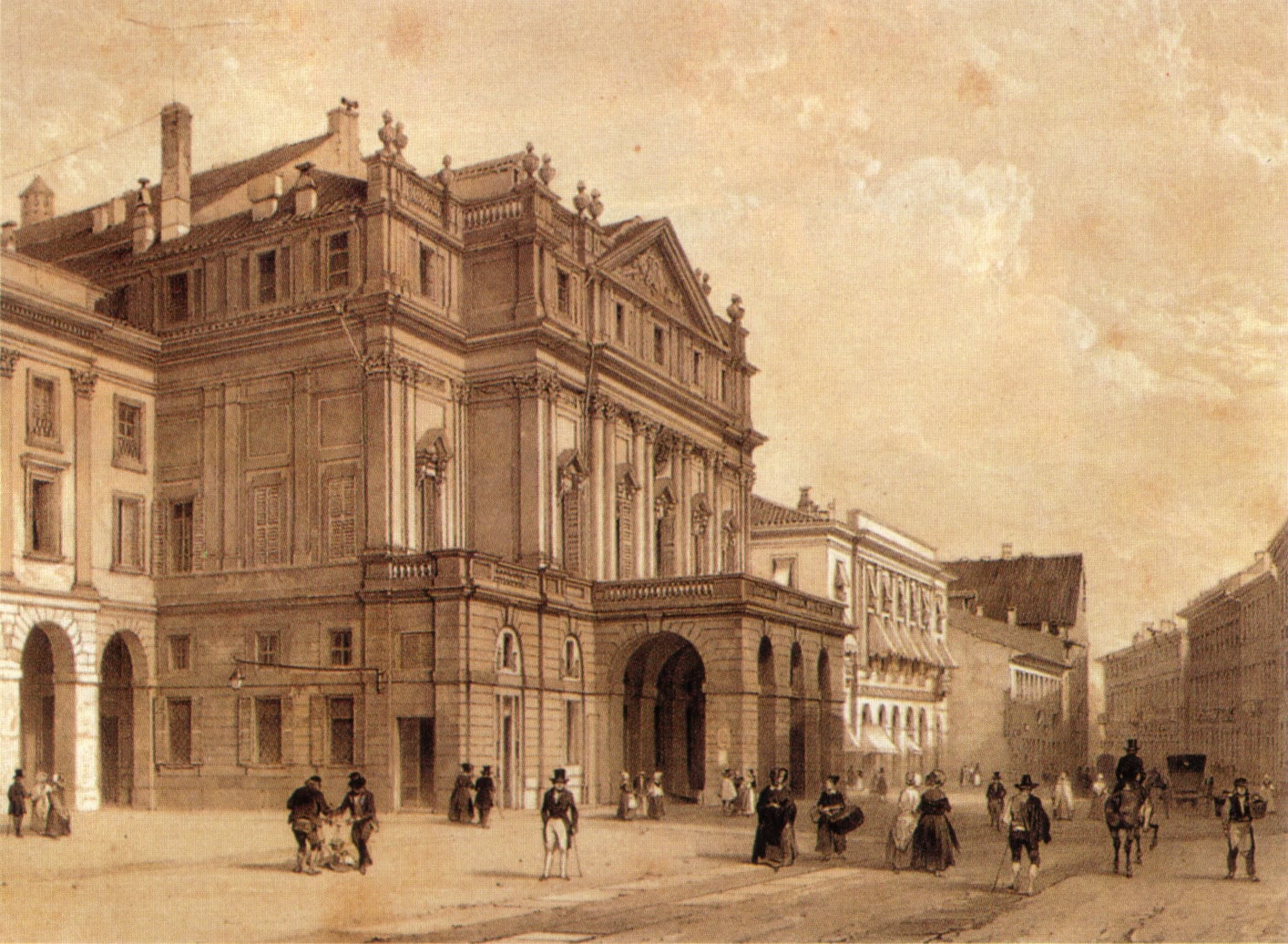
La Scala in Milan (19th century)
Painting
Puccini had composed and fully orchestrated nearly seven-eighths of the work, up to and including the funeral procession in Act 3. The last missing one-eighth consists of the final duet between Calaf and Turandot, as well as a brief closing scene featuring the Emperor with his court and his subjects.
One other important aspect of Puccini’s working style was also missing: his method of composing at the piano was always accompanied by the subsequent incorporation of practical performance experience, which had led to changes in his other operas. In the case of Turandot, Puccini didn’t live to see any rehearsals or the premiere. Puccini’s successor was therefore unable to call upon any practical experience or inspirations which Puccini may have gained from rehearsals and performances.
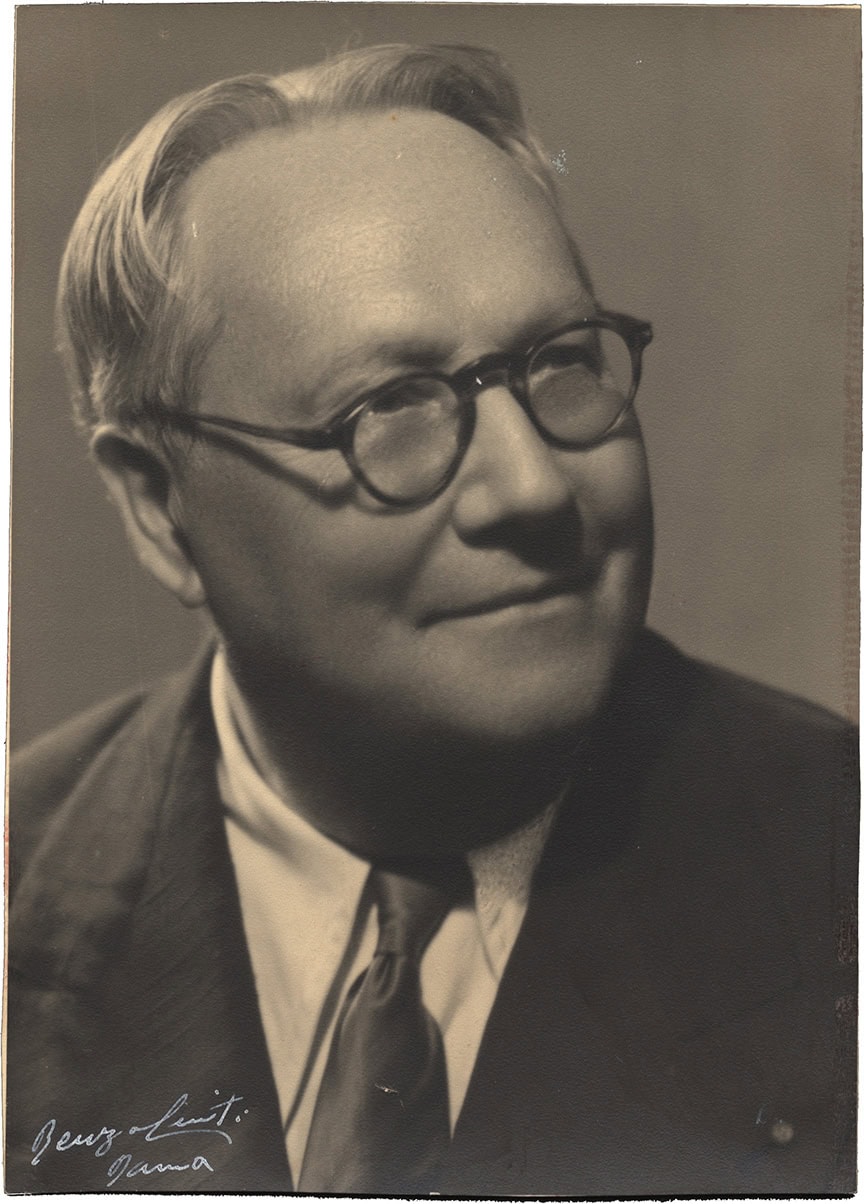
Franco Alfano
1875 – 1954
Alfano began working on completing the fragment shortly after Puccini’s death. To this end he had access to some of Puccini’s sketches and notes, although not all of them, only a selection previously chosen by Tito Ricordi’s circle. Alfano focussed above all on finding a musically and dramaturgically coherent solution for the finale by painting a plausible transformation of the ice-cold princess into a loving woman, and thus achieving an organic conclusion to the opera.
Toscanini was highly dissatisfied with Alfano’s first draft. It was not close enough to Puccini’s sketched ideas; stylistically he heard more Alfano than Puccini, and he found the music too bombastic and lacking in dynamic nuance (as would have been typical of Puccini). Like Puccini, Alfano chose very high vocal ranges for Turandot and Calaf, but over a more massive, louder orchestra. Toscanini therefore compelled Alfano to make revisions and cuts, and even made some himself, so that Alfano’s second version of the finale ended up roughly one-third shorter than his first.
This second version was heard for the first time at the performance following the premiere. The longer first version, also published by Ricordi, possibly received its own premiere on July 4, 1926, at the Saxon State Theater in Dresden. Consequently there were three ways to perform Puccini’s last opera: as a fragment by itself, or with Alfano’s original longer ending, known as Alfano 1, or with the revised shorter ending, i.e. Alfano 2. Alfano 2 has largely prevailed in productions of Turandot, yet even today theater practitioners continue to search for an alternative ending to the opera.
Certainly the most prominent solution after the two Alfano versions is Luciano Berio’s new ending from 2001. Berio adhered to the plot framework devised by Puccini and his librettists, but he consistently cut every passage of text for which Puccini had not sketched any music. In addition, Berio wrote a kind of “music about music”: rather than opting for a musical-dramatic solution, he chose to reflect from a meta-level above the action, commenting on the ending from a distance (and thus detaching it from direct experience). Berio’s postmodern stance clearly acknowledged a historical distance from Puccini, which became a creative catalyst for a genuinely new answer to the question of the finale, emphasizing the modern aspect of the work. His finale does not end with a triumphant, affirmative final chorus for the now-united couple. Instead it fades away quietly, keeps the memory of Liù’s sacrificial death alive, and thereby remains open-ended, more like a commentary on Puccini’s opera than a completion of it.
Puccini expert and musicologist Deborah Burton took a different approach. Her finale, presented for the centenary of Puccini’s death in 2024, aimed to come as close as possible to Puccini’s musical-dramaturgical intentions. Consequently she sought to take into account as many of the composer’s sketches and notes as possible. Above all she drew on her close study of all Puccini’s operas to fill in the missing elements by using models from other operas at comparable points in the plots.
Between Berio and Burton, two further completions deserve mention, by Janet Maguire (1988) and Hao Weiya (2008). The former was performed in New York in 2010; the latter was created with the advice of the Puccini Foundation in Italy, but the composer neither consulted all the sources nor followed up on Puccini’s hints in his working notes.
For the centenary of the premiere several opera houses sought other creative solutions to Turandot’s problematic finale. In April 2026 Oper Frankfurt, for example, preceded Puccini’s work with a new prologue by composer Lucia Ronchetti. Inspired by Gesualdo’s madrigal Io tacerò, it focuses on Liù’s sacrificial death and thus arcs forward to the end of the original fragment with the funeral procession for Liù. In June 2026 the Staatsoper Stuttgart chose a different path, letting the opera conclude with the Prelude and Liebestod from Richard Wagner’s Tristan und Isolde. This addition was inspired by a Turandot sketch on which Puccini noted poi Tristano, or “then Tristan”, a reference to the sudden, “Tristan-like” moment of Turandot’s transformation into a loving woman and her subsequent union with Calaf.
Even after one hundred years, Giacomo Puccini’s opera still poses the question to performers, “What do you do with my (non-)ending?”
The choice of two endings in the Carus edition
The practical edition from Carus offers two possible endings as solutions to the finale problem of Turandot. One is the second version of the finale written by Franco Alfano in the wake of Puccini’s death, the so-called Alfano 2; the other is the finale written in 2022 by Puccini specialist Deborah Burton.
Franco Alfano’s 1926 finale strove to bring Puccini’s work to completion using his leftover material. From the outset however it was subject to a crucial limitation, in that Alfano had to accept a compromise with the publisher Ricordi and the conductor Toscanini, who had made a preselection from Puccini’s posthumous material for him, with the result that he did not have the complete Turandot estate at his disposal. Alfano’s first version of the finale, which aimed for a dramaturgically coherent resolution of the plot, contained his own musical additions, along with inserted passages of text that deviate from the libretto. Toscanini criticized both and demanded drastic cuts. Where the first version comprises 377 measures with a duration of about 22-24 minutes, the second version (Alfano 2) is over 100 measures shorter at 268 measures and lasts only around 12-15 minutes. One could say that an independent, late-Romantic verismo finale thus became a streamlined, functional finale.
In any case Alfano 2 remains the most frequently performed ending for Turandot. Thanks to the cuts, it is closer to the compositional sketches and to Puccini’s style than the first version: it’s also tighter than Alfano 1, and very practical to perform. Carus has slightly tweaked this standard Alfano 2 finale in its performance materials. For a few measures it requires an instrument change from a B-flat to an A clarinet. To save the player having to switch to a “cold” instrument, the Carus edition transposes these measures for B-flat clarinet, a procedure that also better resembles Puccini’s style: he did not prescribe a change from B-flat to A clarinet anywhere in Turandot. (For a historically informed performance of the opera, Carus additionally offers an A clarinet part in the Alfano finale.)
Puccini expert Deborah Burton relied on a combination of source study and analysis of the work for her finale, which is published exclusively by Carus. Her goal was a reconstructive completion of the fragment, with priority given to realizing Puccini’s original dramaturgy. Burton understands Turandot as a typical late work informed by Puccini’s entire output. As well as using as many of the composer’s surviving sketches and notes as possible, she therefore regarded the adoption of dramaturgical solutions from his earlier operas (“Puccinian models”) in her reconstruction of the finale as both coherent and legitimate. She noted, “My version of the finale uses 185 measures of Puccini’s music, plus another 81 that are reused or slightly amended from earlier in the opera, for a total of 266 measures of Puccini (of 343 total). My own contributions span only 77 measures, all based on Puccinian models.” (Deborah Burton, Puccini’s Last Act: Finishing Turandot).

Dr. Henning Bey has been working as Promotion Manager for Stage and Orchestra at Carus-Verlag since October 2025. Previously, he served as Artistic Planner with the SWR Symphony Orchestra, Chief Dramaturge of the International Bach Academy Stuttgart, and Dramaturge at the Freiburg Baroque Orchestra. He gained editorial experience as a member of the editorial team of the New Mozart Edition in Salzburg.
The Performance Materials
The performance materials, with either the Alfano 2 finale or the Burton ending, may be hired from Carus. In addition Carus offers the full score and the vocal score, each with both endings, for purchase. The orchestral parts contain a wealth of useful additional information for better orientation within the work and for optimal coordination between the orchestra pit and the stage. The individual parts include cues from the vocal lines or key orchestral parts, each underlaid with the corresponding text. These cues are notated partly directly in the music, and partly on an extra stave above. The beginning and end of divisi passages are indicated with arrows, and there are also smart page turns, all helpful extras for avoiding unpleasant surprises during a performance. The great clarity and optimal legibility of the score and parts, along with the dramaturgically inspired smart page turns, contribute to this as well.
The Carus performance materials, available in both digital and physical formats, consist of the full score, vocal score, instrumental parts, director’s book (for left- and right-handers), libretto in three languages, and rehearsal scenario.
Mozart: The Magic Flute (for chamber orchestra)
Urs Stäuble’s version reduces the orchestra to chamber size without compromising the musical substance. On the contrary: thanks to the transparent instrumentation, the melodic lines and harmonic progressions emerge with greater clarity. The original trombone parts are here performed by the other wind instruments, while trumpet and timpani are included ad libitum.
Puccini: Tosca
The critical edition from Carus-Verlag sets new standards by combining the great expertise and practical experience of Italian musicologist and opera conductor Andreas Gies. The edition is based on a score from 1924, the last to be published during Puccini’s lifetime. Based on an extensive comparison of sources, Andreas Gies has restored the differentiated, original readings that were evidently close to the composer’s heart. In many cases, Gies has made use of the autograph score, which clearly reflects Puccini’s ideas.
Monteverdi: L’Orfeo
Music has the power to melt hearts. When Orfeo sings, even the gods relent and the gates to the Underworld open. But will the singer succeed in snatching his beloved Euridice from the shadow of death? The tragic love story of Orpheus and Eurydice from Greek mythology combines all the elements that make for a great opera plot. Monteverdi’s version from 1607 is not just one of the earliest operas, but also one of the most famous.
Puccini: Tosca - Vissi d’arte
In “Vissi d’arte”, Tosca faces a moral test that threatens her life and her love. In this scene from the second act, she finds herself in a desperate situation, tormented by the intrigues, dangers and challenges of her life. The heart-rending aria, which touchingly reveals the protagonist’s inner turmoil and moral conflict, is full of emotional intensity and musical beauty.
Puccini: Tosca - E lucevan le stelle
In the famous and devastating scene from the third act, Cavaradossi, gazing at the shining stars in the night sky, reflects on his life and his love for Tosca. In the depths of despair, he is living through the final moments before his execution – a powerful musical testimony to love and loss.
Puccini: Turandot - Nessun dorma
In Puccini’s epic opera Turandot, Calaf sings “Nessun dorma” as he bravely contemplates the challenges to be overcome to win the heart and hand of Princess Turandot. None shall sleep until the Princess’s riddles are solved and hope has triumphed. His bold expression of confidence and success culminates in a powerful anthem that captivates all who hear it.


Leave a Reply
Want to join the discussion?Feel free to contribute!