
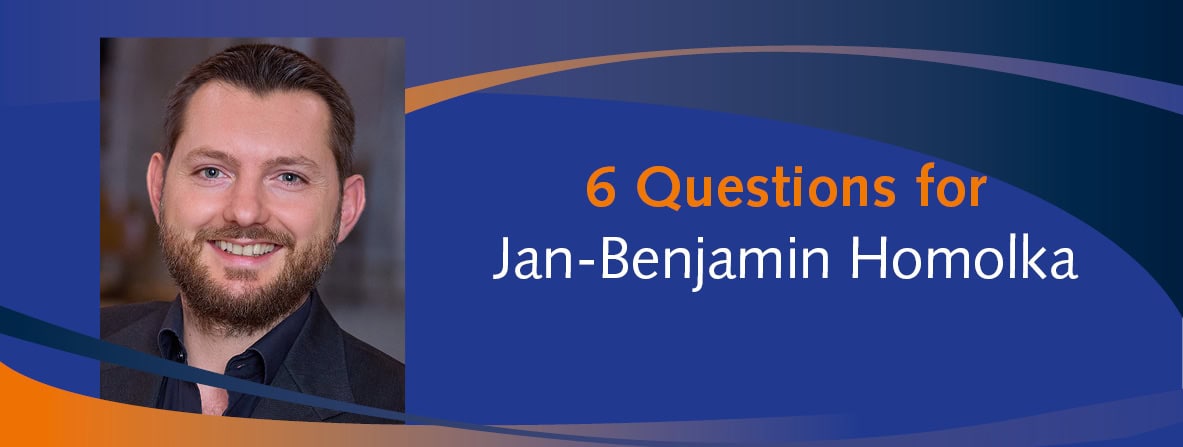
6 Questions for Jan-Benjamin Homolka
An Interview
Jan-Benjamin Homolka works as a conductor with numerous ensembles in the Stuttgart region. He is also a sought-after arranger. He has received commissions for arrangements from, among others, the opera houses of Stuttgart, Aachen, Nancy, and Dijon, the Evangelische Landeskirche in Würrtemberg (Protestant Church in Württemberg), the Bundsjugendorchester (German Federal Youth Orchestra), and the Hanke Brothers ensemble.
Your first original piece?
From the moment I could play my first notes, I started experimenting — trying things out, seeing what was possible, and jotting down little snippets of music along the way. What really pushed me toward tackling larger pieces was playing music together with my family. My siblings and I play trumpet, French horn, cello and trombone — not exactly a combination for which you can easily find ready-made repertoire. Whenever we wanted to play something together, we had to work around the two transposing brass instruments as well as the varying skill levels of my younger siblings.
So right from those early pieces, I was learning the fundamentals of harmony, counterpoint and instrumentation — and putting them into practice at the same time. When the Hanke Brothers approached me a few years ago and asked me to write music for their unusual line-up, the task felt immediately familiar.
Which (other) composers inspire you?
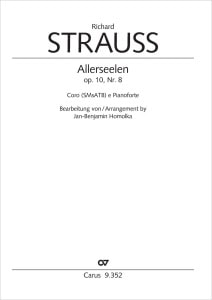
I find the way the great Baroque composers saw themselves genuinely inspiring — Bach and Handel, for instance. They were instrumentalists, conductors, ensemble musicians, composers and arrangers all at once, and would probably never have thought to draw a line between any of these roles. To them, they were simply “musicians.”
Today, the musical world tends to be far more specialized. We have carved its different areas into distinct professions, and even within performance itself there are further subdivisions — historically informed practice being one obvious example.
In my own work, I try to draw on everything I have encountered across all areas of my musical life, and I genuinely hope that my pieces are richer for my practical experience as a conductor and as a musician in both choir and orchestra.
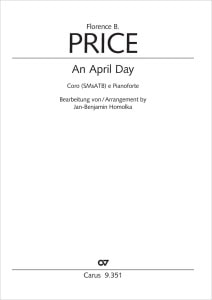
Beyond that, I am always excited by discoveries outside the established classical canon. I recently gave a concert focused on music by women composers, and while putting together the programme I came across a wealth of wonderful music — by Florence Price, Amy Beach, Pauline Viardot and Louise Héritte-Viardot, among others. There is equally rewarding music to be found in the work of composers like Charles Koechlin, Paul Juon and Charles-Valentin Alkan.
Your most emotionally powerful musical experience so far:
The first performance of Mahler’s Symphony No. 2 that I had the chance to be part of.
Where do you prefer to work?
Honestly, I am happiest working quietly at my desk.
Your current composition/arrangement project:
As usual, several things are on the go at once. For a Mendelssohn programme of sacred choral music, I am writing chamber orchestra arrangements of a number of works. For the Bundesjugendorchester, I am working on a new orchestration of Wagner’s Wesendonck Lieder. And for a choral programme next year built around settings of Shakespeare, I am planning several new choral pieces as well.
When you are not composing/arranging or making music, you…
I love being outdoors, and whenever I travel I enjoy getting to know the cultural life and history of wherever I find myself.
Jan-Benjamin Homolka received his musical education at the HDMK Stuttgart (Stuttgart University of Music and the Performing Arts), studying Music Education with a focus on Conducting, Horn, and Music Theory, as well as History at the University of Stuttgart. works as a conductor with numerous ensembles in the Stuttgart region. He is also a sought-after arranger. He has received commissions for arrangements from, among others, the opera houses of Stuttgart, Aachen, Nancy, and Dijon, the Evangelische Landeskirche in Würrtemberg (Protestant Church in Württemberg), the Bundesjugendorchester (German Federal Youth Orchestra), and the Hanke Brothers ensemble.


Leave a Reply
Want to join the discussion?Feel free to contribute!