
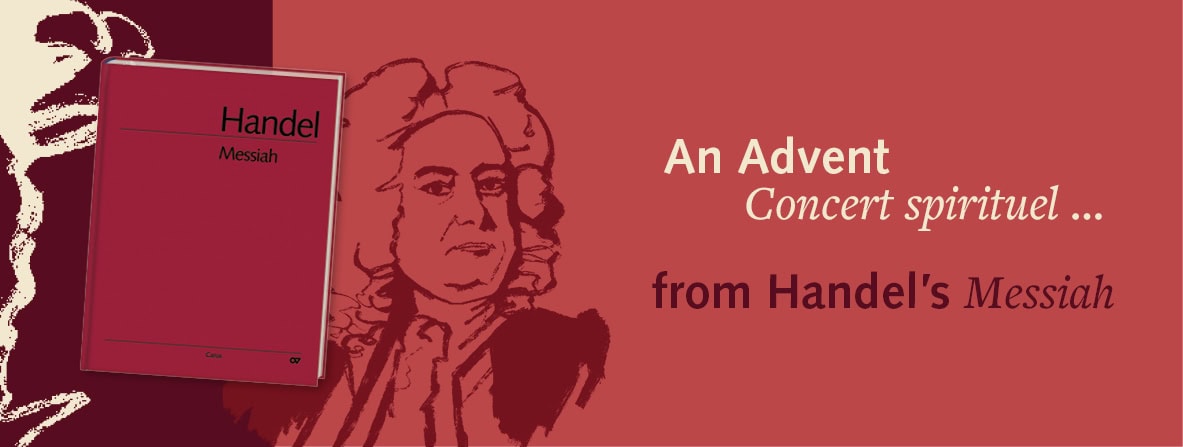
A Musical and Literary Program for Advent
featuring excerpts from George Frideric Handel’s Messiah (Nos. 1–11)
By leaning into the model of the French concert spirituel, Handel’s universally beloved Messiah, which generally weighs in at around three hours, can be transformed into the central focus of a tailor-made pasticcio for the Advent season. When selected excerpts from the oratorio are combined with literary and liturgical readings, along with congregational singing, the result is a compelling one-hour program, both engaging and much more economical to produce.
An Advent Concert spirituel …
Handel’s three-part Messiah (1741), performed complete and in concert, is a journey through the entire church year in a single evening, from the overture and the promise of the birth of Christ, all the way to the Second Coming at the end of time and the grand Amen. Perhaps though there is also a vague feeling that the Passion movements are no more appropriate in an Advent concert as the Christmas choruses are for Easter.
But there is an alternative! Precisely because Handel presents the figure of the Messiah so comprehensively, a full concert performance is not the only conceivable way in which to perform the work during Advent. Why not, for once, present individual excerpts from the oratorio in the form of a Concert spirituel, incorporating additional musical, literary and liturgical elements as well as optional congregational singing? A performance like this would last about one hour, instead of three. The costs remain manageable, since the full quartet of vocal soloists isn’t always needed, and there’s also no requirement for timpani or trumpets during Advent.
Here we present a tried and tested Advent celebration centered on the joyful anticipation of the coming of Christ. At first we struggled with the omission of Luke’s account of the Nativity scene, although logically, of course, the Nativity occurs after Advent – but then we realised that Handel’s setting of the prophet Isaiah’s promise, For unto us a child is born, is a powerfully effective conclusion for Advent. And anyone who’d also like to include the Pifa will surely find a suitable place for it in an Advent program!
… with oratorio, readings and rejoicing
Beginning with the overture to the “oratorio of all oratorios” is certainly an option. But why not a Gregorian prelude? Musically this might seem to come from a far distant time, yet it flows organically, tonally, almost dramatically into said overture. This signals a message from the very beginning: today we are celebrating Advent and embracing a variety of musical and literary styles.
Stefan Zweig’s famous story The Resurrection of Georg Friedrich Handel (from his book Sternstunden der Menschheit/Decisive Moments in History) is certainly a romantic, artistic-religious idealization. But it’s also a poetic approach to important aspects of the Messiah, and so a few passages could be incorporated effectively into the Advent program, including, for instance, this one as an introduction to the tenor’s opening recitative, Comfort ye, my people:
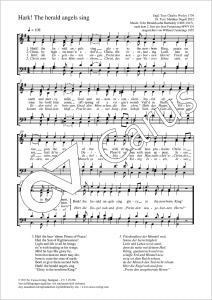
Mendelssohns Hark! The Herald Angels sing would be an excellent choice as a congregational hymn.
Handel’s Messiah in the Rhythm of the Church Year
Similar projects can be created around Handel’s Messiah throughout the church year: based on Part I during Advent or Christmas, on Part II during Passiontide and after Easter, and on Part III toward the end of the church year – for example, on the last Sunday of the church year, just before Advent. The format could be more concert-style or more liturgical, or it could straddle both elements in the spirit of a “celebration.” And why not follow a few such musical “Messiah devotions” with a full concert performance of the “oratorio of all oratorios” the following year?

Prof. Dr. Meinrad Walter is a distinguished scholar whose work sits at the intersection of music and theology. Since 2008, he has taught musicology, theology, and liturgical studies at the Freiburg University of Music, which awarded him an Honorary Professorship in 2012. A prolific author, he has also led workshops and presented radio broadcasts on church music, hymnology, and music education and outreach.
A one-hour Advent program featuring Handel’s Messiah
Advent hymn
Veni, redemptor gentium
a cappella choir, with alternating verses for men’s and women’s voices
in In hymnis et canticis (Nr. 100)
CV 19.007/00

Handel: Messiah (Part 1)
Welcome and Reading
Isaiah 40:1–11
Handel: Messiah (Part 2)
Recitative (Tenor): Comfort ye, my people
Air (Tenor): Every valley shall be exalted
Chorus: And the glory of the Lord
from George Frideric Handel: Messiah
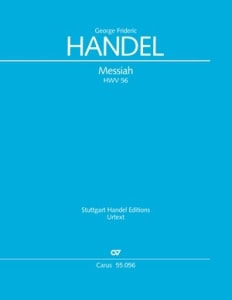
CV 55.056/00
Reading (Part 1) Stefan Zweig: „Decisive Moments in History“
Selected passages: Stefan Zweig – The Resurrection of George Frideric Handel from Decisive Moments in History
Handel: Messiah (Part 3)
Accompagnato (Bass): „Thus saith the Lord“
Air (Altus): „But who may abide?“
Chorus: „And He shall purify“
in Georg Friedrich Händel: Messiah
CV 55.056/00
Reading (Part 2) Stefan Zweig: „Decisive Moments in History“
Further selections frpm Stefan Zweig’s The Resurrection of George Frideric Handel from Decisive Moments in History,
or alternatively a biblical or literary reading
Handel: Messiah (Part 4)
Recitativo (Altus): „Behold, a Virgin shall conceive“
Air (Altus) and Chorus: „O thou that tellest good tidings“
in Georg Friedrich Händel: Messiah
CV 55.056/00
Advent meditation
Newman John Henry Newman: Lead kindly light
or Advent Meditation by John Henry:
“Advent”
They watch for Christ,
who are sensitive,
eager,
apprehensive in mind,
who are awake,
alive,
quick-sighted,
zealous in honoring him,
who look for him in all that happens,
and who would not be surprised,
who would not be over-agitated or overwhelmed,
if they found he was coming at once….
This then is to watch:
to be detached from what is present, and
to live in what is unseen;;
to live in the through of Christ as he came once,
and as he will come again;
to desire his second coming, from our affectionate
and grateful remembrance of his first.
–Cardinal John Henry Newman.
Handel: Messiah (Part 5)
Accompagnato (Bass): „For behold, darkness shall cover“
Air (Bass): „The people that walked in darkness“
Chorus: „For unto us a child is born“
in Georg Friedrich Händel: Messiah
CV 55.056/00
Hymn
Felix Mendelssohn Bartholdy / William Cummings (arr.): Hark! The herald angels sing
Organ postlude
ad lib: Improvisation, or Alexandre Guilmant, Paraphrase sur un chœur de Judas Macchabée, op. 90, no. 16


Leave a Reply
Want to join the discussion?Feel free to contribute!