
Passion Music in Flux
Carl Philipp Emanuel Bach and the aesthetic of Empfindsamkeit
Today when we think of settings of the Passion, the first that spring to mind are Johann Sebastian Bach’s St. John Passion, BWV 245, and the St. Matthew Passion, BWV 244. And then our minds hit a blank. Yet Passions were certainly written before, alongside, and after Bach. Representative of their time, these works were influenced by contemporary fashions and intellectual currents. While Bach was still composing his more traditional oratorio Passions in Leipzig, the “hip” new Passion oratorio, which dispensed with any biblical verses, was beginning to make inroads. Originating in Hamburg, Passion oratorios conquered church services and, above all, the concert hall; the famous “Brockes Passion” of 1712, named after its poet, the Hamburg merchant’s son Barthold Heinrich Brockes (1680-1747), while not the first, was certainly the most widespread and frequently set Passion text of its time. Bach also used it as a basis for some movements of his St. John Passion.
Johann Sebastian Bach
St. John Passion. Passio secundum Joannem
Version IV
BWV 245 (BWV3 245.5), 1749
Carus 31.245
Carl Philipp Emmanuel Bach
Passion according to St. Matthew
Incorporating Music by Johann Sebastian Bach
BR-CPEB Dp 4.1, 1769
Carus 33.503
Musical tastes began to change as early as the 1730s, favoring the so-called Empfindsam (“sentimental”) style, which placed a premium on authentic (i.e. not stylized) feelings, naturalness, and simplicity – clearly a reflection of the Enlightenment spirit. The fact that this applies equally to text and music is evident if we consider C.P.E. Bach’s oratorio Passions. In Hamburg, where Carl Philipp Emanuel was employed from 1768 as the city’s director of music, responsible for the five main churches, a new (!) oratorio Passion was performed every year during the Passiontide services, namely a work based around a biblical narrative or, as Bach once wrote, an “old-style” Passion. His first Hamburg Passion, the St. Matthew Passion of 1769, BR-CPEB D4.1 (Carus 33.503), was already conceived as a pasticcio: He combined his own, predominantly new compositions (all free poetic texts) with material taken from his father’s St. Matthew Passion, BWV 244. The chorales and most of the turba choruses (in single-chorus arrangements) are borrowed while the recitatives are newly composed along the lines of those of J.S. Bach, often note-for-note copies. Here and there the tessitura is adapted and Jesus’s words are reworked as secci; above all. Emanuel’s recitatives are much plainer: he excised – quite deliberately – all the elaborate forms of expression that make Johann Sebastian Bach’s recitatives so unmistakable as these were no longer à la mode.
The response to his first and most ambitious Hamburg Passion was probably rather discouraging – the only recorded comment being that it was considered too long. The following 20 (!) Passions by C.P.E. Bach are not only shorter, they also contain much less (if any) new music. Emanuel drew on familiar Passions and cantata movements by Georg Philipp Telemann, Gottfried Heinrich Stölzel, Georg Anton Benda and, above all, Gottfried August Homilius. He shortened the Passions and, if the piece was to be performed again, replaced the movements on poetic texts with other borrowed material.
Bach transformed his St. Matthew Passion of 1769 into a non-liturgical Passion oratorio, the so-called Passions-Cantate, Wq 233: The account of the Passion of Jesus was replaced by newly set poetic text, chorales were largely ejected and new movements inserted here and there. Composed outside of Bach’s official duties, the Passion oratorio was conceived for concert performance rather than church service. And Bach landed a real hit in Hamburg: After the first performance in 1770, it was performed annually in the city until 1785.
Carl Philipp Emmanuel Bach
Passions-Cantate
The Last Sufferings of the Saviour
BR-CPEB D 2 (Wq 233), 1770
Carus 33.233
The first choral movement “Fürwahr, er trug unsere Krankheit” from the St. Matthew Passion of 1769 also found its way into the Passions-Cantate. It is a reworking of the magnificent “Et misericordias” from C.P.E. Bach’s Magnificat of 1749, Wq 215 (Carus 33.215, movement 4). When Bach performed his Magnificat again in Hamburg in 1779, he had to compose a new “Et misercordias” (movement 4a), as the Passions-Cantate was now so well-known that it would have been too obvious to retain it.
But it was not only in Hamburg that the Passions-Cantate was heard on repeat occasions. Performances are also documented in Berlin, Danzig, Halberstadt, Cologne, Königsberg, Copenhagen, Ludwigslust, Potsdam and Riga. Indeed, almost 50 contemporary copies of the score have survived. Although Bach was not quite able to match the immense success of Carl Heinrich Graun’s Passion oratorio Der Tod Jesu, GraunWV B:VII:2, of 1755 (Carus 10.379), he nevertheless succeeded in achieving a similarly widespread popularity throughout the German-speaking world as his contemporary Homilius with his Passions-Cantate “Ein Lämmlein geht und trägt die Schuld”, HoWV I.2, of 1775 (Carus 37.104). And both works also made their way to 18th-century USA via the musical practices of the Moravian Brethren.
All Passions and Passion oratorios from the Empfindsamkeit period (the “sentimental” style) strike a more conciliatory tone than the Passions of J. S. Bach and his contemporaries. The suffering of Jesus is portrayed less drastically, and the Passion events are often described indirectly; yet, at the same time, the works are highly compassionate. Many of the Passions of this period already foreshadow the Easter celebrations by concluding with a hymn of praise: The last movement of C.P.E. Bach’s Passions-Cantate begins: “Praise him, redeemed sinners! Sing praises to the victor”.
The music is deliberately kept much simpler than in the first half of the century, with a stronger sense of melody, but at the same time with a very colorful, almost classical orchestration and treatment. Anyone who has grown up with the Passions of J.S. Bach may need time to develop a taste for this very different style of text and music. On the other hand, if you discover the Passions of the Empfindsamkeit period with no other musical references, you’ll probably find these more immediately approachable than the complexity of J.S. Bach – you can simply surrender yourself to the undeniable beauty of this music.
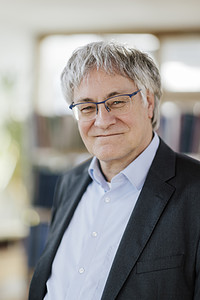
As a musicologist, Dr. Uwe Wolf is particularly at home in the 17th and 18th centuries. The focus of his work ranges from the time of Monteverdi and Schütz to Bach and the generation of Bach’s sons and pupils through to Viennese Classicism. He has been head of the editorial department at Carus-Verlag since October 2011. Prior to this, he worked in Bach research for over 20 years.
C.P.E. Bach: The Resurrection and Ascension of Jesus
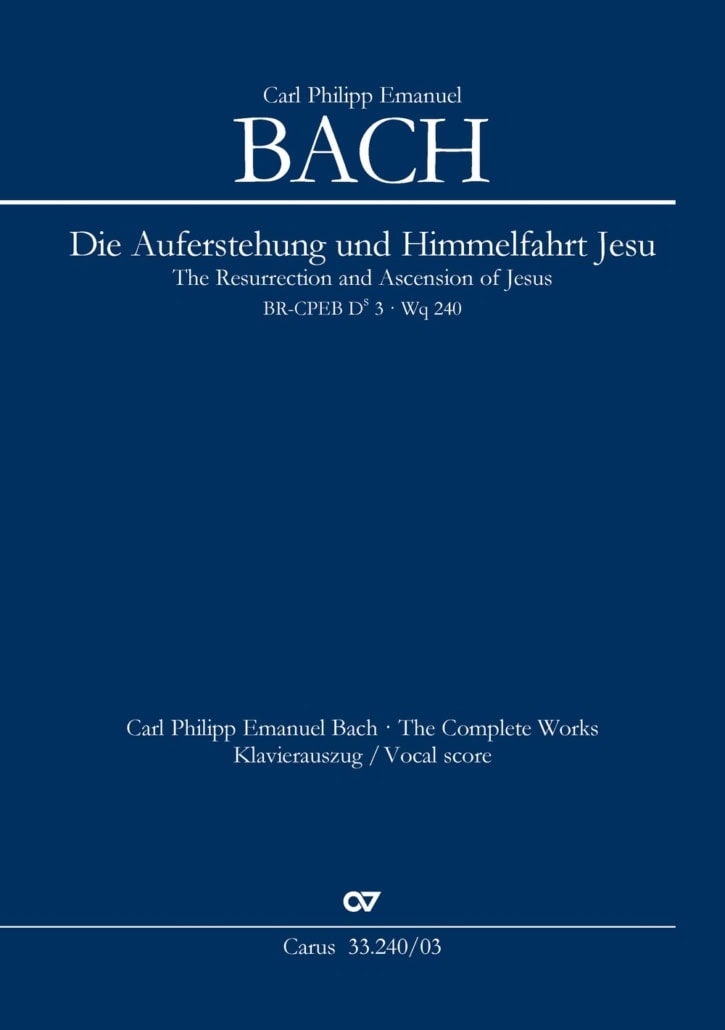
Of the three oratorios which Carl Philipp Emanuel Bach composed when he was music director in Hamburg, Die Auferstehung und Himmelfahrt Jesu (The Resurrection and Ascension of Jesus) is particularly intended to create splendor and effect with its use of magnificent-sounding trumpets and timpani. Bach liked this work very much and had it published in 1787, the year before his death.
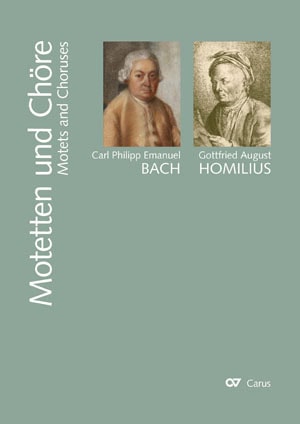
C.P.E. Bach and Homilius: Motets and Choruses
Bach-Repertorium. Catalog of the Works of the Bach Family 3/2: C.P.E. Bach


Leave a Reply
Want to join the discussion?Feel free to contribute!