
The Loyal Defeated and The Magnanimous Conqueror
Johann Adolf Hasse: Cleofide
Johann Adolf Hasse’s Cleofide from 1731 was his first opera for the Dresden court. It tells of Cleofide’s loyalty and the unwavering benevolence of the conqueror Alessandro. Hasse wrote vividly colorful music for the best orchestra in Europe and tailored the leading role for his wife, the famous prima donna Faustina Bordoni. Cleofide marked the beginning of Hasse’s time as court conductor to the Elector of Saxony and the King of Poland, during which period Dresden was to emerge as one of the leading musical cities of the 18th century.
Creation and reception
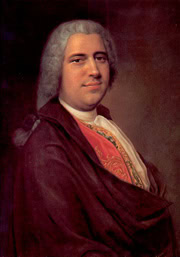
There were two distinct musical cultures at the Dresden court at the start of the eighteenth century. The Saxon Elector and Polish King August the Strong preferred French music, while his son and heir Friedrich Augustus was a passionate admirer of Italian music. The period around 1731 marked a significant turning point for Johann Adolf Hasse and the Saxon court alike: the pendulum in Dresden had swung in favor of Italian opera, and Hasse’s appointment as court Kapellmeister played a major role in this development. Hasse himself was caught up in a whirlwind of events reminiscent of a dramatic opera plot. During the Carnival of Venice in 1830 a highly acclaimed performance of his opera Artaserse made him an overnight sensation, and then in May he enjoyed another triumph with his opera Dalisa. Between these two events he married the famous prima donna Faustina Bordoni. He was also hired by the Saxon-Polish court as opera music director. Strangely it took a whole year before the new Kapellmeister actually assumed his post. At the time of the wedding Faustina was not only expecting their first child, but she had also included a clause in the marriage contract (in addition to the handsome dowry she was to provide) stipulating that her husband was not allowed to leave Italy without her. Since she saw no reason to leave her homeland, she initially tried to thwart her husband’s engagement in Dresden. In July 1731 the couple finally arrived in the Saxon capital, where they gave several concerts together, and Hasse completed his new opera Cleofide over the next three months. It premiered on September 13, followed by five more performances, and was enthusiastically received. However only one further additional performance is documented in the 18th century, during the Berlin Carnival of 1777, apparently at the request of Frederick II. In 1736 Hasse set Metastasio’s original libretto of Alessandro nell’Indie to music and he re-used several arias from Cleofide.
Plot and libretto
The libretto for Cleofide is Michelangelo Boccardi’s adaptation of Pietro Metastasio’s Alessandro nell’Indie. The plot is almost identical, but the focus shifts from Alessandro (Alexander the Great) to Cleofide, the wife of his adversary Poro, King of India. The importance of Cleofide’s character automatically expanded with her elevation to the title role, and Hasse naturally tailored the part specifically for his wife, the prima donna Faustina.
The Macedonian King Alessandro has arrived in India on his campaign of conquests. There he defeats King Poro on the banks of the Hydaspes. Cleofide is the wife of Poro, who treats her with suspicion and jealousy. Erissena is Poro’s sister and betrothed to his confidant Gandarte. Another central character is Alessandro’s trusted advisor Timagene, who is also driven by personal motives.
After his defeat, Poro wants to take his own life, but Cleofide stops him and implores him to remember their love for each other. Taken prisoner by Timagene, he calls himself Hasbytes, a friend of Poro’s, and impresses Alessandro so much with his courageous directness that the conqueror releases Poro. Alessandro also grants freedom to the captured Erissena, with whom Timagene immediately falls in love. In doing so, Alessandro unwittingly wins her heart, which angers Timagene and prompts him to plot a coup. Gandarte, who pretends to be Poro for a while in order to save him, is rejected by Erissena, who has fallen in love with Alessandro. Timagene conspires with Poro, but their joint plan to defeat the Macedonians in a second battle fails. To the jealous Poro, Cleofide, who is negotiating with Alessandro, appears to be a treacherous traitor. Alessandro wants to protect her from the wrath of her people and sees the only solution as a quick marriage to him. As rumors circulate that Poro has drowned, Cleofide agrees and secretly resolves to kill herself afterwards. In the end the misunderstandings are all cleared up: Poro is alive, Alessandro brings him together with Cleofide and allows them to keep their kingdom. He forgives the renegade Timagene. Poro in turn rewards Gandarte’s loyalty and marries him to his sister Erissena.

J. A. Hasse
Cleofide
Opera in three acts, 1731
Carus 50.704/00

Dr. Henning Bey has been working as Promotion Manager for Stage and Orchestra at Carus-Verlag since October 2025. Previously, he served as Artistic Planner with the SWR Symphony Orchestra, Chief Dramaturge of the International Bach Academy Stuttgart, and Dramaturge at the Freiburg Baroque Orchestra. He gained editorial experience as a member of the editorial team of the New Mozart Edition in Salzburg.
Music
Upon his arrival in Dresden Hasse was confronted with a challenging situation. The singers were mediocre, and the Italian opera troupe lacked a tenor, who would have been particularly suitable for the role of Alessandro! Instead Hasse was forced to compose for four castrati – one soprano and three alto voices. Cleofide has the most prominent role with six major arias at crucial points in the plot, Poro and Alessandro sing five, Erissena and Gandarte four, and Timagene three arias.
At that time the performance quality of the Saxon court orchestra was renowned. Hasse therefore wrote solo parts for the orchestra’s well-known virtuosi in individual arias, which cleverly covered up the sometimes modest quality of the singers. Timagene’s aria È ver che a l’amo intorno (Act 2, Scene 11) was flanked by two virtuoso flute parts, played by Johann Joachim Quantz and Pierre Gabriel Buffardin. Similarly in Alessandro’s aria Cervo al bosco (Act 3, Scene 6), the solo horn played by Johann Adam Schindler almost overshadowed the singer himself with a spectacularly high entry. On top of that the aria became a showpiece for the lutenist Silvius Leopold Weiss, who, although normally part of the basso continuo group, was also awarded a solo by Hasse.
Overall the opera consists of an alternation between recitative and aria, as was customary since Metastasio. In addition, at the end of both the first and second acts, there is a duet between Cleofide and her husband Poro. While the first is a singing duel between the wildly jealous Poro and the conciliatory Cleofide, the second duet begins with the two singing in parallel thirds. The conflict has not yet been resolved, but the two are drawing closer to each other again. The end of the third act concludes with the only two choruses of the entire opera. Even though they follow each other in quick succession, there is a development between them: the first sings of a funeral pyre to be lit and invokes Hymenaeus, the god of marriage, for the wedding between Alessandro and Cleofide (who has only pretended to consent and wants to throw herself into the flames), while the second, as the final chorus, celebrates the now-burning fire as a symbol of reconciliation and a happy ending for all.
Edition
The Carus edition is based on the Dresden performance material from 1731 with its nuanced details on dynamics and articulation, which make it possible to reconstruct the performance aesthetics of the time.
Requiem - Miserere (CD)
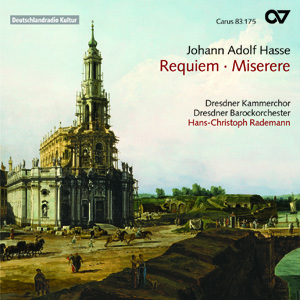 The two Johann Adolf Hasse compositions recorded here are proof of the both high quality of his music and the broad range of styles which he had at his disposal. Once again Hans-Christoph Rademann offers an exemplary interpretation of music from the Court of Dresden, to which he has often dedicated his musical efforts.
Marc’Antonio e Cleopatra. Serenata
 With this early work, which Hasse composed while a student of Alessandro Scarlatti’s and still heavily under his influence, and which was performed at the country estate of the royal advisor Carlo Carmignano in September 1725, Hasse was able to draw attention to himself as a composer for the first time publicly. The libretto stems from Francesco Ricciardi; the famous singers Vittoria Tesi and Carlo Broschi (Farinello) sang the two main roles.
Selected Works
As a composer, Johann Adolf Hasse was the uncontested idol of the late Baroque era. On the occasion of his 300th birthday, the Hasse-Gesellschaft Hamburg-Bergedorf began publishing a selection of his works in a critical edition. The Hasse Works Edition (HWA) is intended to serve both as an impeccable text for muicologists and as basis for practical performance.







Leave a Reply
Want to join the discussion?Feel free to contribute!