

A Lively With and Against Each Other
The “Te Deum a 8” by Felix Mendelssohn Bartholdy lies close to Mayira Florschütz’s heart
“Wer Musik nicht liebt, verdient nicht, ein Mensch genannt zu werden, wer sie nur liebt, ist erst ein halber Mensch, wer sie aber treibt, ist ein ganzer Mensch.” – “He who does not love music does not deserve to be called a human being; he who merely loves it is only half a human being; but he who makes music is a whole human being.” (transl. from http://www.gresham.ac.uk/lectures-and-events/goethe-the-musician-and-his-influence-on-german-song). In accordance with this Goethe quotation, my choice of a favorite piece is for a work which not only lies especially close to my heart, but one which I also performed most recently: The Te Deum a 8 with basso continuo, by Felix Mendelssohn-Bartholdy.
This challenging work belonged for many years to the established repertoire of the Berliner Singakademie, the first important medium for the performance of Mendelssohn’s sacred music. Composed in the context of Carl Friedrich Zelter’s Akademie [school surrounding Carl Friedrich Zelter], the Te Deum of 1826 displays influences of old Italian vocal polyphony, whose distinctive features Mendelssohn first became acquainted with through Abbé Fortunato Santini in Rome and Justus Thibaut in Berlin. It is simply fascinating how Mendelssohn plays with polyphony using the most diverse means, so that lively singing, both together and with the voices against one another emerges.
Mendelssohn’s sacred vocal music is a cornerstone of his creative output. It reflects and represents the musical development and diversity of this composer. His complete sacred vocal music is available in historical-critical editions and on CD at Carus – Read more!
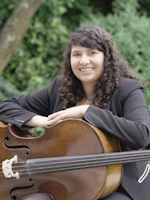
Mayira Florschütz earned her Masters degree in musicology at the Eberhard Karls Universität Tübingen and worked at Carus-Verlag in business development and marketing.
Full Score
 One of the most beautiful spiritual works of Mendelssohns early years, which was inspired by Händel´s setting of the Te Deum and was performed many times at the Berliner Singakademie.
App
 One of the most beautiful early sacred works by Mendelssohn, inspired by Handel’s Te Deum settings and performed several times in the Sing-Akademie Berlin. carus music helps choral singers to successfully master the demands of the eight-part counterpoint, text, intonation, and the different musical challenges.


Does anyone have any insight on when the second movement 9 was composed?
Dear Ms Walshaw, thank you for your comment on Mendelssohn’s early Te Deum! In our edition we have tried an explanation in the Foreword which runs more or less as follows:
“The second “Salvum fac,” No. 9, was inserted into the autograph score with the original version from 1826 later, written on a separate sheet of manuscript paper.
Unfortunately the date of this additional movement cannot be precisely ascertained: at the end of the movement Mendelssohn wrote “Berlin, 18th July,” but when the pages of the autograph were trimmed the indication of the year was cut off and lost.
It may, however, be assumed that it dates from 1827 or 1828. Firstly Mendelssohn was in Berlin on the 18th July of both years (he was not in Berlin during the
summers of 1829–31), and secondly the supposition that the alternative movement dates from 1827 or 1828 is supported by the style of the clef
signs at the beginning of this movement, which differ from those used throughout the remainder of the autograph score. Mendelssohn never wrote clef signs in this way in his vocal works com-
posed before and during 1825; such clefs are, however, to be found in Tu es Petrus, dated 4th November 1827, and in Jesu, meine Freude, dated
22.1.1828.”
We are not sure whether there has been any very recent reaserch on the matter. The Mendelssohn Werkverzeichnis (Ralf Wehner 2009) also dates it between 1826 and 1828.
Best regards from the Carus team